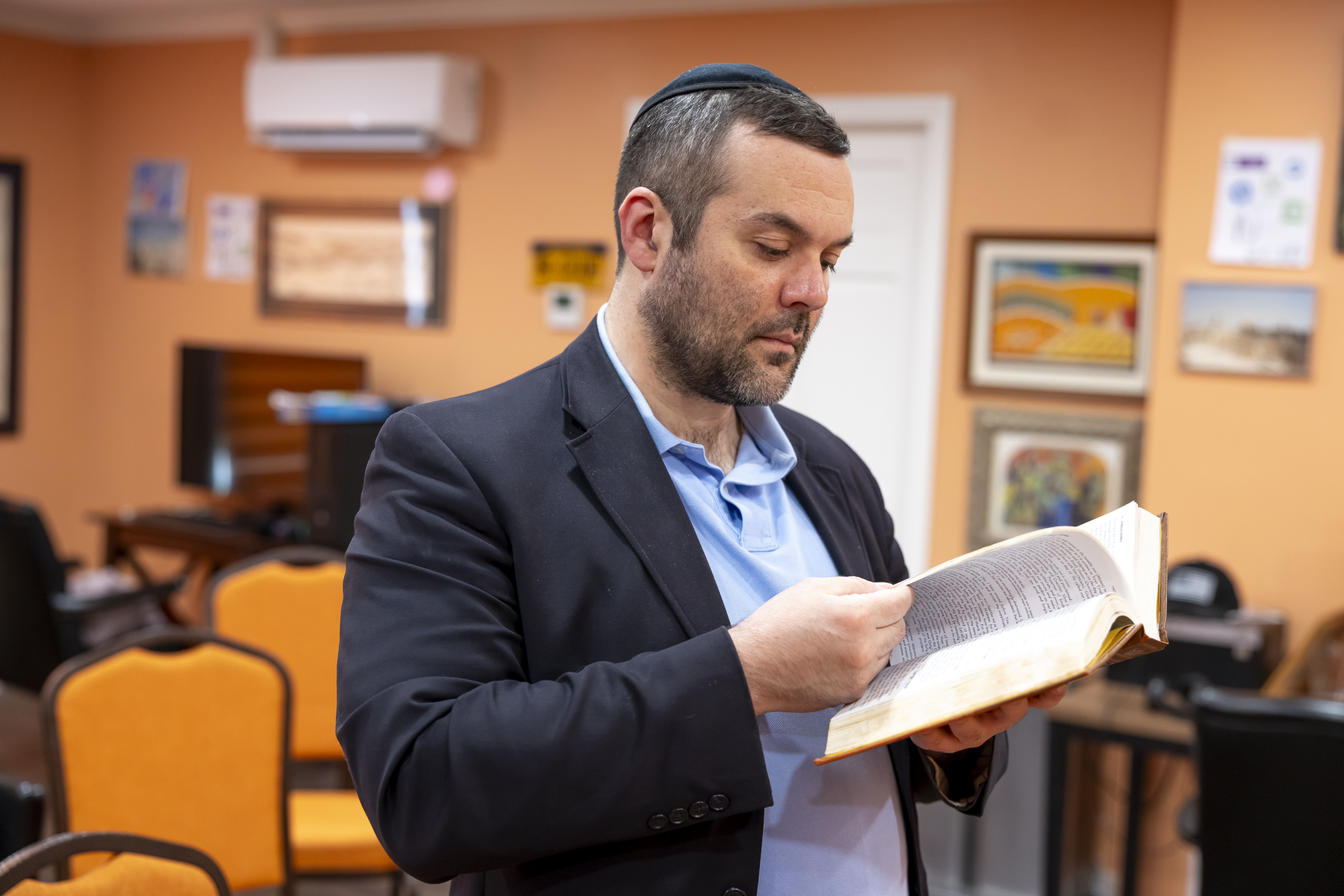
WASHINGTON – The U.S. Supreme Court agreed Tuesday to hear the case of a devout Orthodox Jew suing the city of University Heights, Ohio, after officials required him to obtain a permit to pray in his home with a small group of friends. Lower federal courts threw out his lawsuit and said he needed to finish the permitting process before vindicating his constitutional rights.
Attorneys with Orrick, Herrington & Sutcliffe and Alliance Defending Freedom represent Daniel Grand, who, in January 2021, e-mailed a dozen friends to invite them to his home to pray as a minyan, a “threshold requirement for the most sacred acts of Jewish communal worship,” that upcoming Sabbath. But when city officials found out about the e-mail, and before any minyan convened, the city demanded that Grand “immediately cease and desist any and all” uses of his home as a “place of religious assembly” unless he first obtained a special use permit, which the city requires for houses of worship in residential districts. When Grand filed a lawsuit, federal courts closed their doors because Grand had not completed the permitting process—even though successfully obtaining a permit would have required Grand and his family to leave their home.
“Every American has the right to host a prayer gathering in his home, and he certainly doesn’t need a city permit to do so. When government officials forbid that, courts must hold those individuals accountable, immediately,” said ADF Senior Counsel and Vice President of Appellate Advocacy John Bursch. “The city’s actions underscore a troubling trend of weaponizing zoning laws against people of faith while allowing other gatherings of the same size, like book clubs or poker nights, to meet without issue. We’re pleased the Supreme Court will hear this case.”
The reply brief filed in May in Grand v. City of University Heights explains that city officials targeted Grand because of his religious practice. He was never trying to establish his private residence as a synagogue; he was simply hosting a prayer gathering with friends. City officials went so far as to order police to spy on Grand’s home and encouraged his neighbors to file complaints if anyone visited. The city then issued unfounded property violations, unlawfully withheld his certificate of occupancy and tax abatements—which cost him thousands of dollars in additional taxes—regularly failed to collect his trash, and engaged in a broader pattern of harassment that went far beyond ordinary zoning enforcement.
The brief further notes how Grand canceled his planned minyan as ordered and tried to comply with the city’s directive by submitting a permit application. But neighbors opposed the permit with letters protesting, “I am not Jewish, and I do not want our neighborhood labeled as Jewish.” The city then broadcast a public hearing marked by overt hostility to Jewish religious practice.
As the hearing ended, commission members asked Grand to submit more materials for discussion at a second public hearing. Grand withdrew his permit application because he did not want to submit to a second (and inevitably hostile) public spectacle, and because he realized that the permit would require him to convert his home into a house of worship, and then he could no longer live there.
A federal court dismissed Grand’s case, ruling that it could not proceed until he finished the permitting process, and an appellate court upheld the dismissal. Grand now asks the Supreme Court to allow his case to go forward.
Alliance Defending Freedom is an alliance-building, non-profit legal organization committed to protecting religious freedom, free speech, parental rights, and the sanctity of life.
# # #