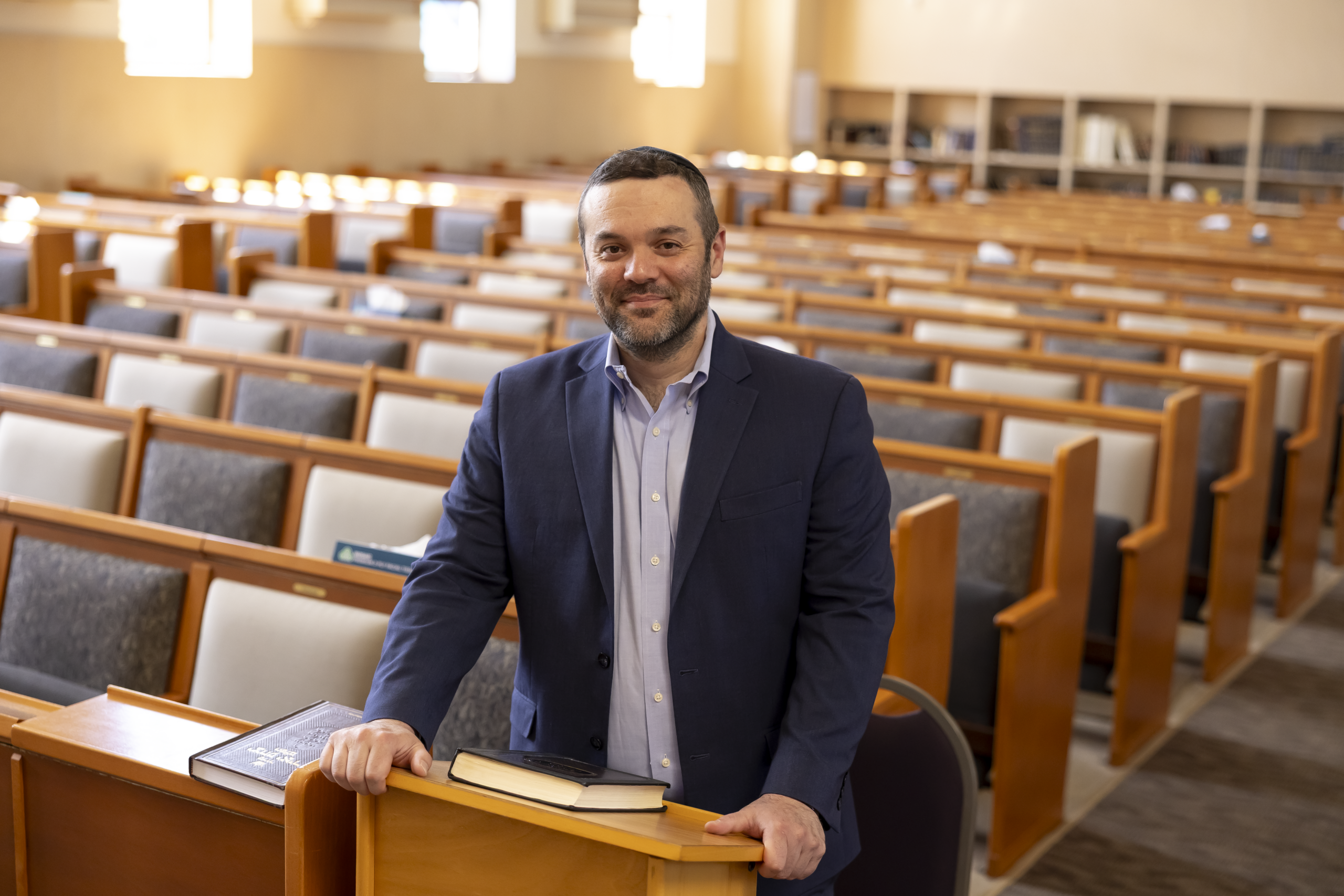
WASHINGTON – The United States government, 14 states, 51 members of Congress, and many religious freedom advocacy groups showed strong support for a devout Orthodox Jew who is suing the city of University Heights, Ohio, after officials required him to obtain a permit to pray in his home with a small group of friends.
Attorneys with Orrick, Herrington & Sutcliffe and Alliance Defending Freedom represent Daniel Grand after lower federal courts threw out his lawsuit and said he needed to finish the permitting process before vindicating his constitutional rights. The high court will hear the case on Dec. 9.
“No American needs a permit to pray. When government officials require a permit to host a prayer gathering in one’s home, courts must hold those individuals accountable immediately,” said ADF Senior Counsel and Vice President of Appellate Advocacy John Bursch. “The city’s actions here underscore a troubling trend of weaponizing zoning laws against people of faith while allowing other gatherings of the same size, like book clubs or poker nights, to meet without issue. We are urging the Supreme Court to uphold Mr. Grand’s right to vindicate his First Amendment freedoms.”
In January 2021, Grand e-mailed about a dozen friends to invite them to his home to pray as a minyan, a “threshold requirement for the most sacred acts of Jewish communal worship,” that upcoming Sabbath. But when city officials found out about the e-mail, and before any minyan convened, the city demanded that Grand “immediately cease and desist any and all” uses of his home as a “place of religious assembly” unless he first obtained a special use permit, which the city requires for houses of worship in residential districts.
City officials targeted Grand because of his religious practice. Grand never wanted to make his private home a synagogue; he was simply hosting a prayer gathering with friends. Yet city officials ordered police to spy on Grand’s home and encouraged his neighbors to file complaints if anyone visited. The city then issued unfounded property violations, unlawfully withheld his certificate of occupancy and tax abatements (which cost him thousands of dollars in additional taxes), regularly failed to collect his trash, and engaged in a broader pattern of harassment.
Grand canceled his planned minyan and tried to comply with the city’s directive by submitting a permit application. But neighbors opposed the permit, protesting, “I do not want our neighborhood labeled as Jewish.” The city then broadcast a public hearing marked by overt hostility to Grand’s religious practice. Yet when Grand filed a lawsuit, federal courts closed their doors because Grand had not completed the permitting process.
The United States, in its brief, explained that Grand “did not need to see the permit process through to bring his claim.” And 14 states, led by Kentucky, filed a brief supporting Grand, stating that, “First Amendment harms happen in real time and thus must be remedied in real time, lest they be lost. Prompt judicial attention to these harms is essential to ensure that one of the crown jewels of our Constitution does not turn into a mere ‘parchment barrier.’”
Alliance Defending Freedom is an alliance-building, non-profit legal organization committed to protecting religious freedom, free speech, parental rights, and the sanctity of life.
# # #